

Fellow Profile: Dr. Gunes Dasli on why Supporting Academics Matters for Human Rights
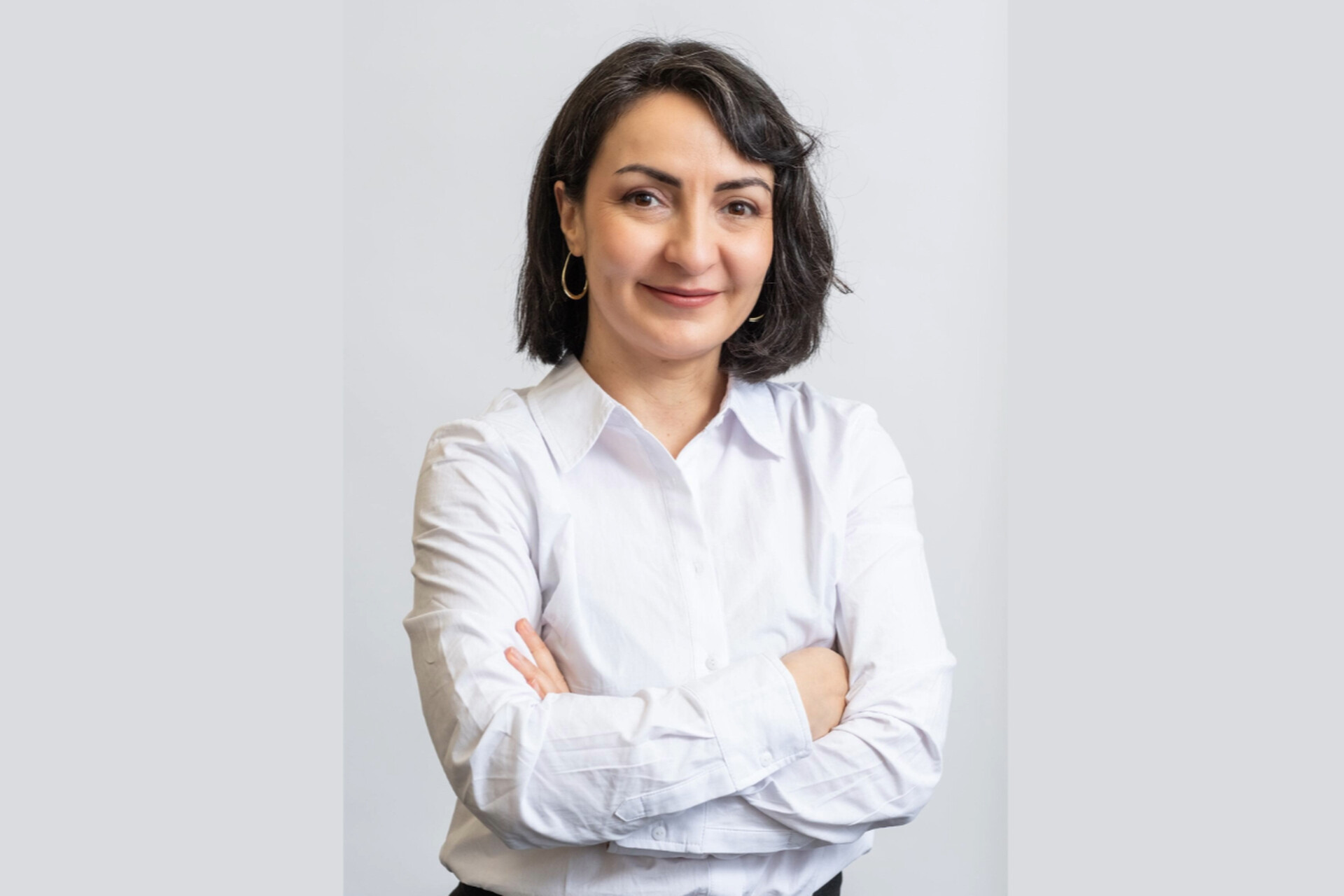
You are both an academic and active in civil society movements. Could you tell us more about your background in human rights in Turkey?
I'm Güneş Daşlı, a Cara fellow at Loughborough University since 2024. Before this, I was doing my PhD in Germany on transitional justice, during which I was criminalised by the Turkish Government. I was working on the Kurdish conflict related to Turkey, which is quite a sensitive topic right now. I have quite a non-linear academic career. Before my PhD I was involved in different movements. I was a feminist peace activist and later held a professional position as a Political Advisor in the Turkish Parliament. I was very much involved in the previous peace process, openly doing lots of activism, but also participating in formal mechanisms.
You faced charges for your work on transitional justice and the Kurdish Peace process in 2017. How has this affected you?
When the peace process collapsed, many activists and academics were targeted. In 2016, a large group of academics launched a peace petition urging the government to resume peace talks to avoid more violence and human rights violations, but the government reacted by dismissing all those 2000 academics from universities.
After finishing my Master’s I quit my position as a political advisor to pursue my PhD in Germany in 2017. At that time, I saw there was no way I could continue working on these topics in Turkey. But after I was awarded my scholarship, a travel ban was issued to me over the accusation of being member of terrorist organisation, which was made without any evidence. Later we learned it was due to my official position in the Turkish Parliament, which was quite contradictory to the accusations of terrorism lodged against me. At that time, arbitrary accusations like these had become normal policies of the Turkish government towards academics. There was a trial and I couldn't start my PhD for over a year due to this ban. After several objections, the travel ban was lifted but the trial continued while I was in Germany. It was very challenging because doing a PhD is already difficult and isolated. It needs a lot of mental effort. But in addition to this, I had even more stress and external concerns due to the ongoing trial.
How does being a Cara fellow in the UK help you continue your research and work?
When I finished my PhD, I couldn't go back Turkey because it was not safe for me. I applied to positions abroad and found Cara together with an advertisement from Loughborough University and a mentor who was very matched with my area. It was extremely important just to have the opportunity to stay out of the country because it provides a feeling of being safe. The physical space helped me put distance with Turkey even though I was working on the Kurdish conflict in my research. Institutional support is also very important. I was quite lucky, but not all of it was luck. I really searched for support and sometimes had to explain my situation to people.
What motivates you to continue pursuing your work despite the challenges you’ve experienced?
I've been working it for a long time in the field. I’m very familiar with the practise at a societal and political level, but now also have the academic qualifications to complement this experience. I still feel that it is important to resolve the Kurdish conflict, which is one of the longest lasting conflicts in Turkey and in the Middle East. And I continue to have this ambition to contribute to any kind of peaceful solution. Part of it is personal. I am still very hopeful that the situation will improve in the long term. I continue to work with victims, activists, and human rights defenders and I see that they are really hopeful despite the challenges so it also creates somewhat of a mutual relationship. But at the same time, we also need new methods and critical approaches in the field of transitional justice and human rights field that reflects what’s happening on the ground. So I also feel as if I’m creating something-- combining all my personal experience and political experiences with all these theories. I'm creating something new and Cara is really kind of is providing this time for me.
Can you tell us about your current research project at Loughborough University?
My first book of publications on transitional Justice and the Kurdish conflict is going to be published at the start of next year. Aside from this, I was awarded a small research grant by Cara and the British Academy. During my PhD I was able to build a theoretical framework that I can now apply to different cases. My current study is about diaspora activism in transitional justice in the context of Syria. In cases in Syria and also, previously, Colombia, people who fled their countries due to war continued to contribute to human rights and push for universal jurisdiction in European countries. I'm studying this and trying to understand their experience as well as their strategies and how they navigate challenges.
What kind of support do academics at risk, especially those working on sensitive issues such as human rights need?
As a scholar at risk working on human rights and justice, you’re already victimised in some form, but you’re also working on victimisation, so there is a little bit of a challenge. Academic support and securing fellowship is very important but it's also about protecting the well-being of scholars at risk.
The most immediate is finding a safe place just to live. But it's not only about that. We are also academics. We also want to advance our research, advance our academic qualifications. The other thing is opening more spaces for scholars to share or disseminate their findings, which encourages knowledge exchange.
Now Cara is providing mentorship for fellows, which is very valuable. After your PhD, you need to find a job, but you need to find it immediately because you are at risk. I remember when I finished my PhD, my mentorship helped me to navigate all these difficulties. I think many academics at risk -- particularly those working in human rights and in my field of transitional justice -- care very much to have really qualified outcomes but sometimes if you don't have enough support at the last stage, you cannot publish your article. So support for well-being, the publication process, mentorship-- any kind of support given to scholars at risk so that they pursue their what they're doing is also very valuable.
How do you think your work as a scholar studying justice and human rights fits into today’s context?
It’s become more and more important nowadays because globally, human rights violations-- particularly conflict related violations-- have been emerging and rising. We are experiencing the rise of all these right wing and authoritarian policies in the Global North and Global South. In this context, what we do as human rights scholars becomes even more valuable.