

Why I had to leave Russia to continue my research: A Russian Cara Fellow's story
The War in Ukraine has displaced 6.9 Ukrainians globally. The European University Association reports that roughly one in five Ukrainian academic and research staff have been forced to leave their country since 2022. Academics in Russia have not been spared. Those who oppose the invasion face repression and crackdowns from Russian authorities.
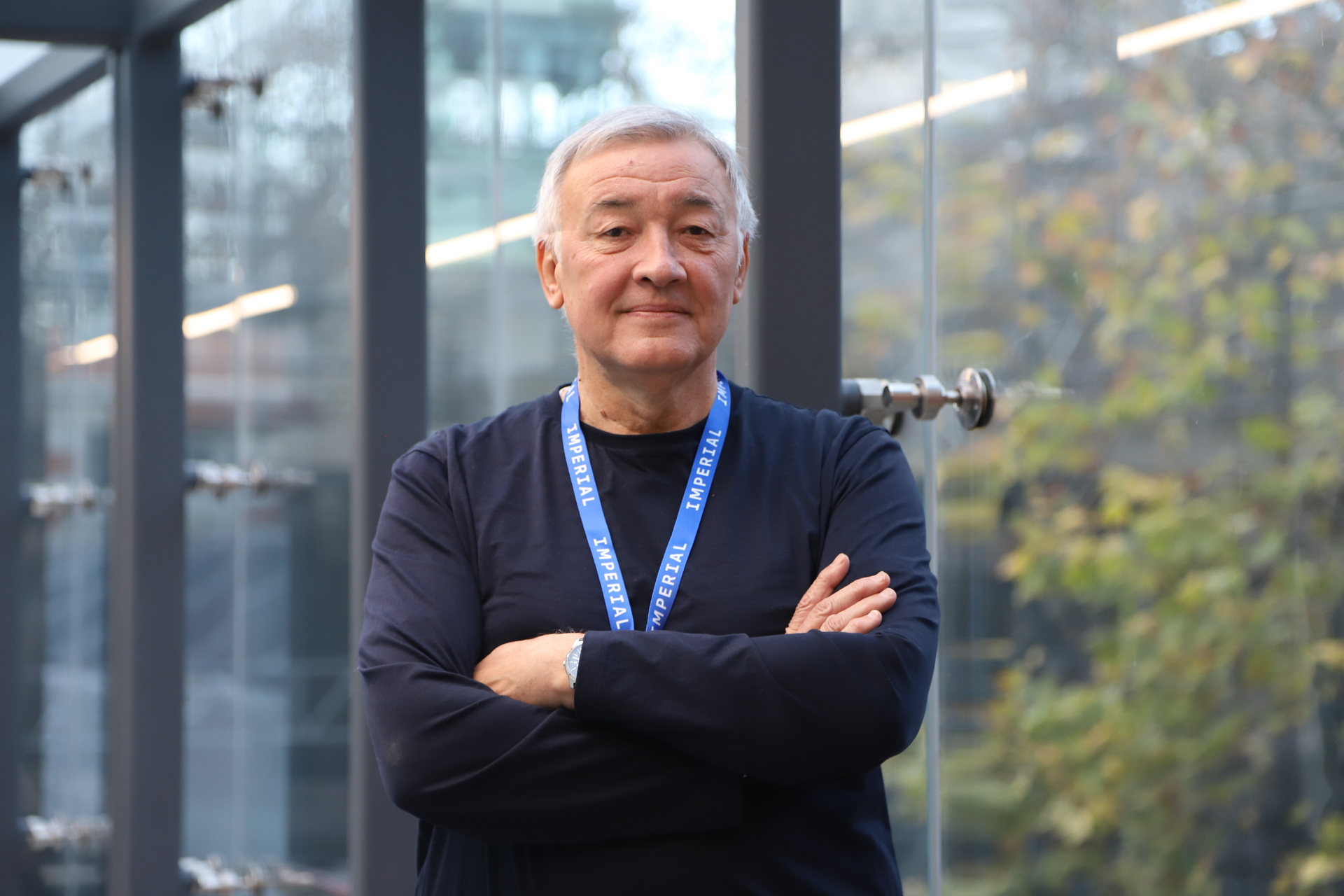
The following piece is written by Cara Fellow Sergey Svetunkov, who was forced to leave Russia for assisting Ukrainians affected by the war. Dr. Svetunkov was formerly a Professor at the St. Petersburg Polytechnic University of Peter the Great. His research involves economic and mathematical and economic modelling. He is currently working at the Imperial College of London Faculty of Engineering as a Visiting Fellow.
Like all scholars under the protection of Cara (the Council for At-Risk Academics), I never intended to leave my country. This was especially true given that I lived and worked as a professor in Russia, in one of the most beautiful cities in the world—Saint Petersburg.
Misfortune struck unexpectedly when, on February 24, 2022, Putin’s Russia attacked Ukraine. There are no economic, social, or political reasons for this war. It is both absurd and criminal. I never hid my opposition to it. It has brought only death and destruction to Ukraine.
Immediately after it began, thousands of Russians across the country became volunteers to help those Ukrainians in territories occupied by Russian forces. My wife and I were also volunteers from the very start. We, too, helped Ukrainians.
Under Russian law, there is nothing criminal about assisting Ukrainians who have suffered from this war—those who have lost loved ones, homes, property, and jobs. There is nothing illegal in helping ordinary people who have lost everything. However, such aid contradicts the official claims of the Russian authorities that they are fighting for the "liberation" of Ukraine. As the situation in the country worsens due to this war, the government is intensifying its crackdowns on all who disagree.
I am one of those who disagree, and I did not hide it. I was forced to resign from my university and leave my country.
I was lucky. Thanks to the support of Cara, I did not end up homeless or unemployed. I can continue my research in economic and mathematical modelling at Imperial College London, one of the world’s leading universities. Upon arriving in the UK, I feared that as a citizen of Russia—the aggressor state—I would face a negative reaction from my new colleagues. But my fears were unfounded. I have met with nothing but help and support from everyone.
Of course, not being perfectly fluent in English is a significant hurdle for me. I never planned to leave Russia; I was absorbed in my research and didn't focus much on my English skills. However, all my colleagues here treat this shortcoming with great understanding.
It has been three months since I began my work in the UK, and I can now share some interim results.
I work in economic and mathematical modelling. Back in Russia, I started researching the possibility of modelling non-linear multi-factor economic dependencies using the Kolmogorov-Gabor polynomial model.
Completing this work in Russia was impossible; here, I have achieved it in just three months. Simultaneously, I am working with colleagues at the university on a joint research project concerning the techno-economic challenges of the energy sector. This is not only intellectually stimulating but also provides an opportunity for the practical validation of my theoretical research in mathematical modelling.
Do I feel joy at having the opportunity, thanks to Cara (the Council for At-Risk Academics), to live in safety and pursue the science I love?
Yes and no.
I have the chance to focus on science peacefully and without distraction. Like any scholar, I am always delighted to achieve new scientific results, and the opportunity to experience this joy was given to me by Cara and Imperial College London. However, this joy is muffled by a persistent sense of guilt toward the millions of Russians who oppose this war but, for many reasons, have been unable to leave Putin's Russia. Here in England, I cannot help or support them as the Russian authorities tighten repressions against those who think differently. I am here, and they are there.
I am certain that all scholars supported by Cara experience these same conflicting emotions. Yet, these moral contradictions must not stop us or hinder our productivity. As the great English thinker Francis Bacon said: “ipsa scientia potestas est” (knowledge itself is power). By working here and expanding scientific knowledge, we make humanity stronger—even against the very threats from which we are protected here in the United Kingdom.